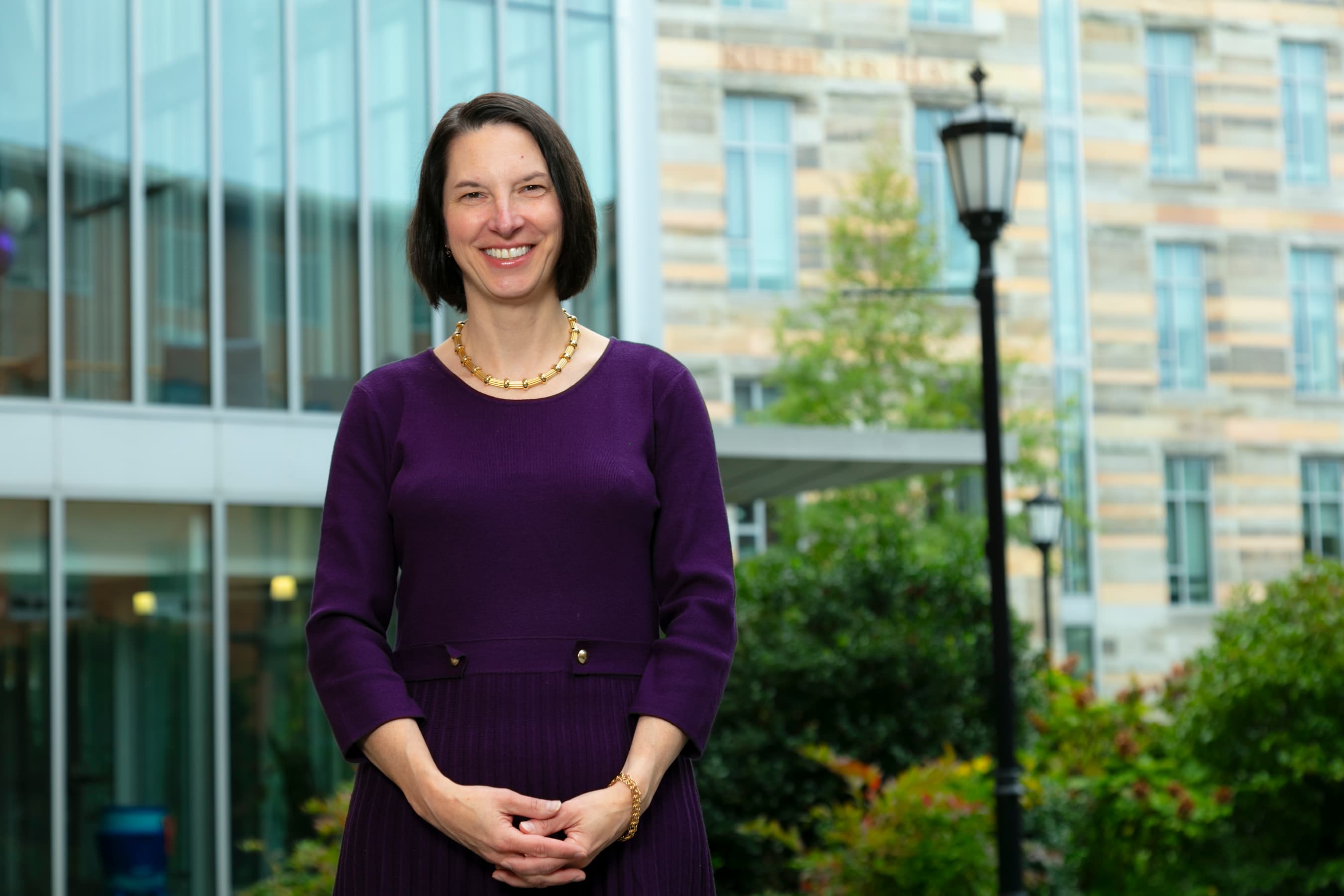
Since joining The University of Scranton in July 2024, Carolyn McNamara Barry, Ph.D., has brought a scholar’s curiosity and a mission-driven approach to her role as Dean of the College of Arts and Sciences. With a background in developmental psychology and a career shaped by teaching, research and leadership at Jesuit institutions, she is guiding the University’s largest and oldest college through a period of thoughtful growth and innovation.
In this conversation with The Scranton Journal, Dr. Barry reflects on the experiences that shaped her academic journey and discusses how research, experiential learning and Jesuit values can prepare students to navigate an increasingly complex world.
Dean Barry, you’ve had an incredible career thus far. When did you first become interested in academic research? Tell us about the path that led you to your role as dean of the College of Arts and Sciences.
In high school, I loved the scientific method but realized I was more fascinated with understanding human nature than the natural world. Thus, my first semester in college taking Introductory Psychology was exhilarating, and taking research methods thereafter opened a whole new world to me.
At the time, all psychology majors at Ursinus had to complete an independent or group research project as a senior. As luck would have it, I presented my senior thesis on my own campus student conference and at a Psychology-only conference held right here at The University of Scranton! Little did I know just how true the statement that “All roads lead to Scranton” would prove to be for me.
I caught the research bug and chose to attend the University of Maryland, College Park’s Human Development program. I resolved throughout my doctoral studies to return to a liberal arts institution … and was offered a job at then-named Loyola College in Maryland, now Loyola University Maryland. ... I loved the idea that I could truly bring my full self to my faculty role. That reality has borne much fruit, now having worked at two Catholic, Jesuit institutions over the last 25 years.
Educational Background
* Ph.D. in human development with a specialization in educational psychology from the University of Maryland, College Park.
* Bachelor’s degree in psychology from Ursinus College with minors in Spanish, Secondary Education and Sociology. Graduated summa cum laude with departmental honors in psychology. Inducted into Phi Beta Kappa as a junior.
As Dean of the College of Arts and Sciences, the University’s largest and oldest college, what excites you most about the opportunities ahead?
No two days are alike as Dean, and I love the opportunity to learn so much about the breadth of the liberal arts each day. I’m excited about our new Ignatian Core Curriculum that we are in the process of rolling out, in particular, the Ignatian Core Capstone that all seniors will complete. It can provide a bookend to the First-year Seminar, and a crucial opportunity for our students to reflect upon and synthesize their Catholic, Jesuit liberal arts education, which will assuredly prepare them even better to live out the mission in their lives beyond their Royal days on campus.
With the launch of our new strategic plan, I am eager to see the various new academic programs at the undergraduate and graduate level that our faculty will build to bring a robust Scranton education to even more students.
“I often tell my faculty and staff that I approach my work as the CAS Dean by first and foremost doing right by our students. Each student matters, and I spend my days striving to create the systems, structures, and policies that support our students’ learning, wellness and formation of their character.”
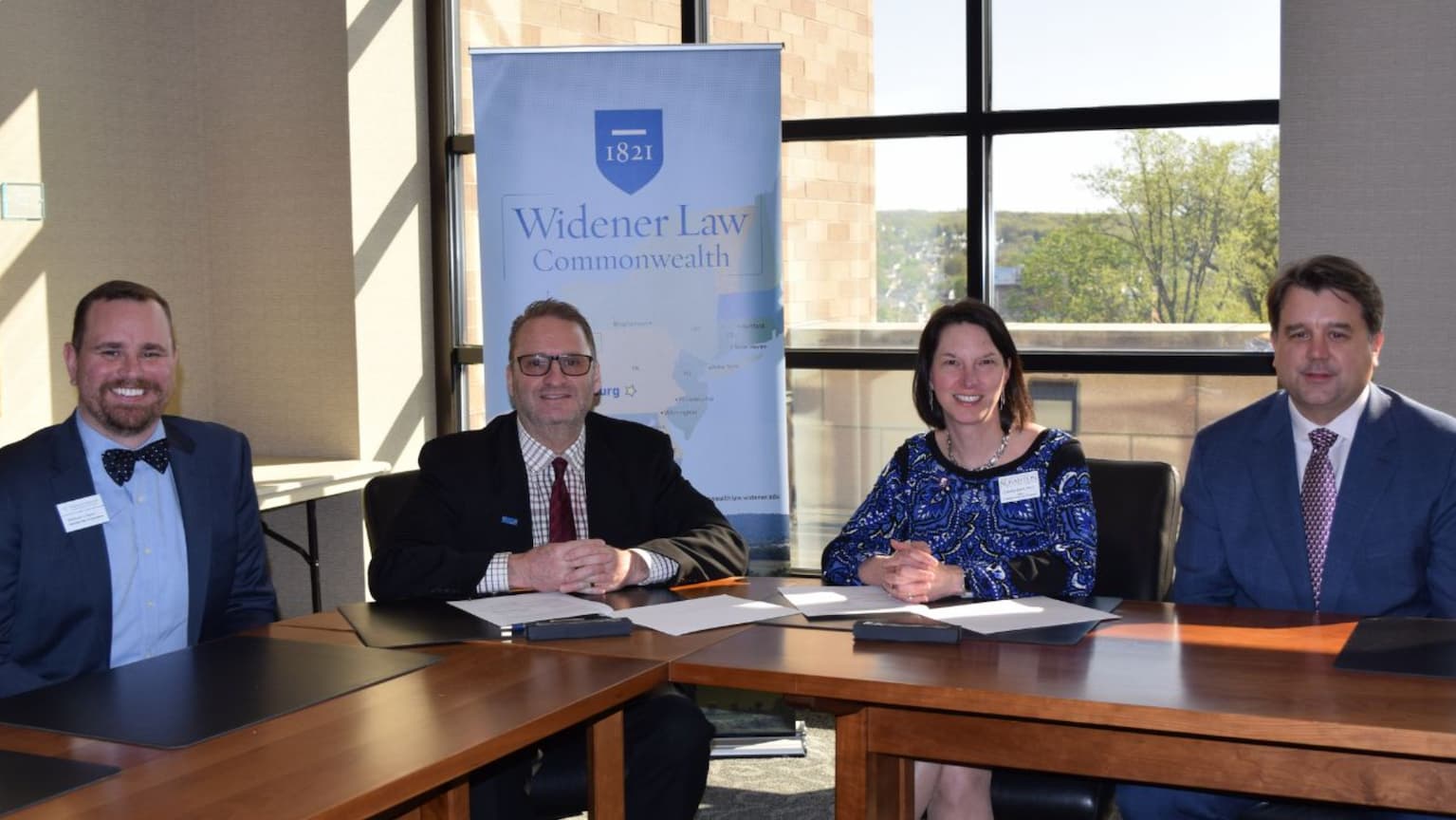
Within your first year here, The University of Scranton and Widener University Commonwealth Law School signed a new 3+3 dual admissions agreement providing an expedited and cost-effective route for students to earn both their bachelor’s degree and juris doctor in just six years. How do you envision that you will continue to strengthen research, experiential learning and interdisciplinary collaboration for students across the college?
Our CAS Student Research Fund is a crucial part of providing students with the supplies and travel monies to present their work at conferences, which I am deeply committed to growing in the years to come. The new Ignatian Core Curriculum, with its civic attribute, has the potential to increase the amount of experiential learning opportunities tied into coursework. Our programs of distinction and various extramurally-funded grants provide rich opportunities for interdisciplinary collaboration for our students with our faculty.
During your tenure at Loyola University Maryland, you served on the Strategic Planning Committee. Currently, The University of Scranton has a new strategic plan rollout in progress. What is your role?
The Deans were brought into the process during Summer 2025 to provide insight and direction into the plan. Now that the Board of Trustees has passed the strategic plan, the Provost is leading the University Planning Committee in which together we are identifying key stakeholders for each piece of the plan. In turn, as CAS Dean, I’ve drafted the parts of the plan specific to our College and have sought feedback from faculty and staff. We will solidify this plan by the semester’s end. It is an exciting time, as together.
"While technology and AI in particular are rapidly changing our world, emerging adults need now, more than ever to find ways to slow down, reflect and center themselves. Our Ignatian spirituality can provide one of the many vehicles to help the interior lives of emerging adults."
You officially stepped into the role of president of the Society for the Study of Emerging Adulthood (SSEA) in 2025. Congratulations! In your presidential address at the SSEA’s annual conference held last summer, you spoke about “the new normal” for emerging adults in a post-pandemic world. What are the most significant shifts you’re seeing among today’s 18- to 29-year-olds?
COVID-19 was a significant disruption to the lives of children, adolescents and emerging adults. While mental health issues were on the rise among emerging adults before the pandemic and spiked during the pandemic, the levels of depression and anxiety have not returned to pre-pandemic levels for emerging adults, even though they have for all other adults in the U.S. (Arnett & Mitra, 2024). Therefore, it becomes crucial for even more encouragement and support to have emerging adults seek therapeutic services to support their mental health.
Moreover, emerging adults whose social lives were disrupted amidst COVID need opportunities to connect with others who provide instrumental and emotional support, but also honest feedback so that they steadily move toward full adoption of adult roles and responsibilities.
Prior to her time in Northeast Pennsylvania, Dr. Barry had always lived by a seaport as her father worked in the maritime industry as a marine surveyor. She and her college sweetheart, Dan Barry, will celebrate their 25th wedding anniversary in June. They have two sons: Kevin Barry, 20 and Ryan Barry, 16.
Beyond St. Thomas Hall
When not leading the College of Arts and Sciences, how does Dr. Barry unplug?
"I enjoy spending time with my family by going to beaches and lakes, hiking, playing tennis and attending performing arts events, museums and historic sites."