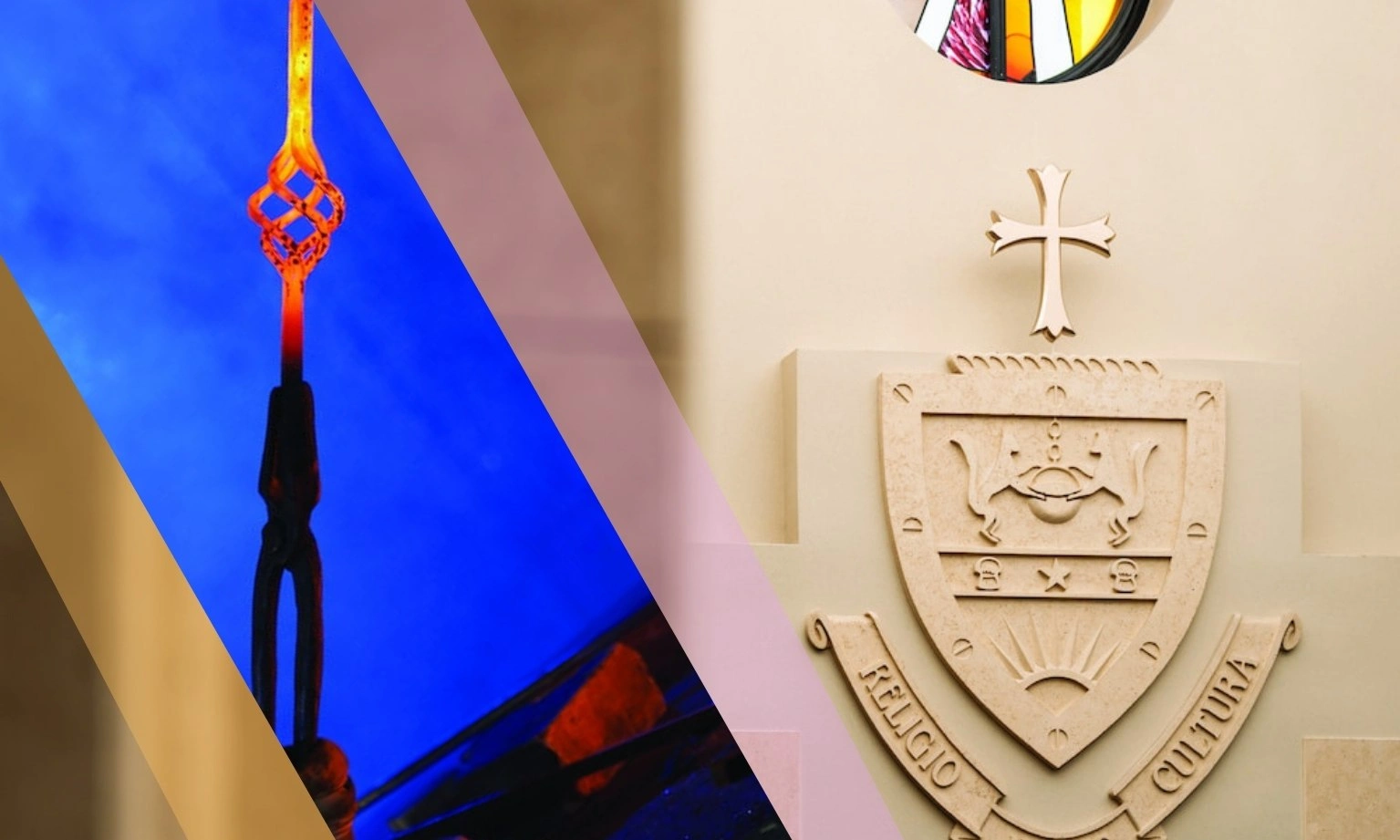
Fire, a powerful symbol in the teachings of St. Ignatius, is also essential to the art of forging, which transforms rigid metal into something strong and malleable.
Likewise, the University’s new strategic plan theme, “Forging Our Future,” reflects adaptability, responding to emerging trends and challenges in higher education while reaffirming Scranton’s enduring mission to educate the whole person and serve the common good.
Approved by the Board of Trustees in December and introduced in January, the plan presents a forward-looking suite of goals designed to guide the University’s priorities through 2026-2030.
Each of its four goals is supported by a series of more detailed objectives, operational steps and intended outcomes. These goals are:
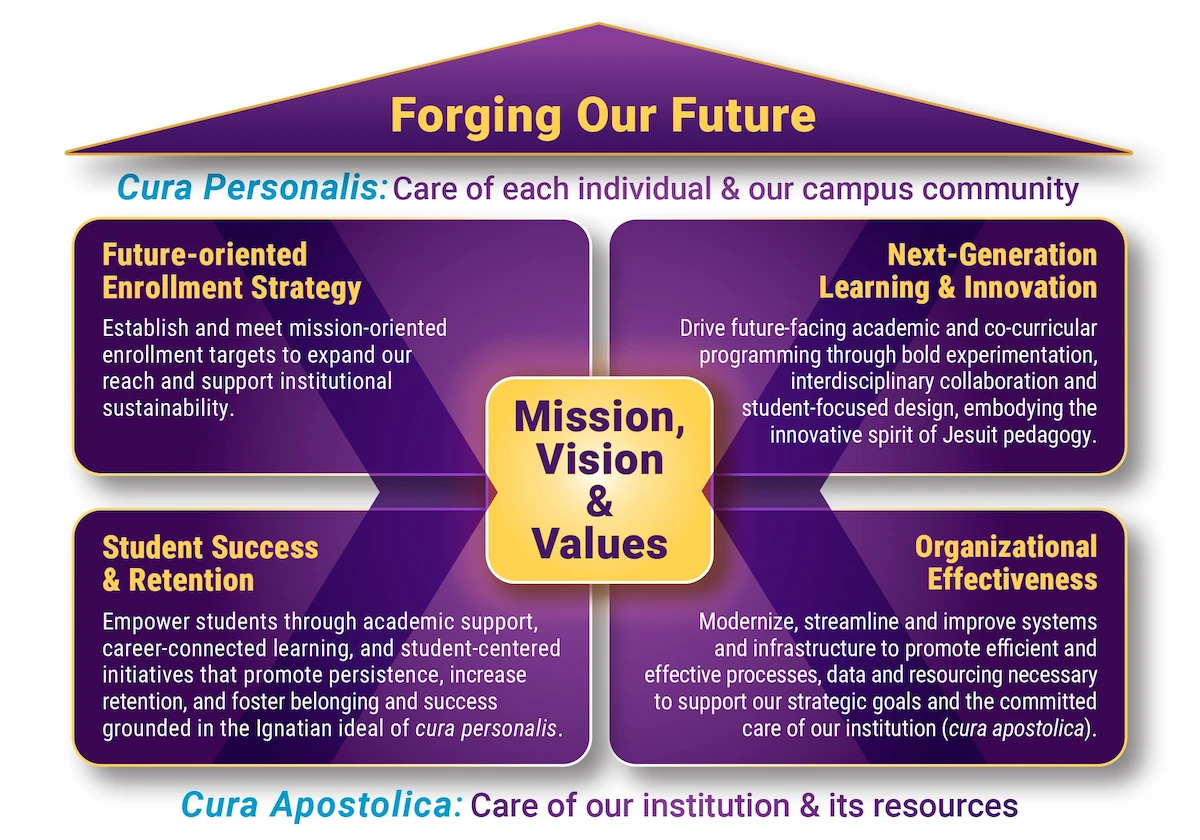

Throughout the planning process, the ideals of cura personalis and cura apostolica, fundamental elements of our Jesuit way of proceeding, informed choices about the plan’s content and directions. These ideals will also inform our approach to the plan’s implementation.
Our Mission: The University of Scranton is a Catholic and Jesuit university animated by the spiritual vision of Saint Ignatius Loyola, a tradition of excellence and a commitment to the common good. The University is a community dedicated to the formation of students, and to the freedom of inquiry and personal development fundamental to the growth in wisdom and integrity of all who share its life.
Our Vision: We will lead confidently into the future — extending our reach, increasing our impact, and preparing graduates to lead and excel. We will ignite within our students and community a shared dedication to the ideals of Catholic and Jesuit education.

“It is common practice for institutions like ours to create and refresh strategic plans every few years. The preparation of this Strategic Plan, however, was much more than a routine undertaking. It was a necessary act of stewardship led by the broadly representative University Planning Committee… Our work is grounded in a mission that calls us not only to maintain the University but also to nurture and strengthen it,” said University President Rev. Joseph G. Marina, S.J.
“Together, we will meet the challenges that lie ahead through innovation and a focus on students who are at the heart of our shared mission.”
Developed through a comprehensive, collaborative effort led by members of the University Planning Committee, the strategic plan incorporates input from students, faculty, staff, administrators, alumni and the Board of Trustees, bringing together diverse voices to examine current realities and consider future possibilities. Their mission-centered act of stewardship resulted in an operational guide that aligns Scranton’s resources, programs and aspirations.
“The Board of Trustees takes its role in the strategic planning process seriously,” said Kevin J. O'Brien, Esq. '80, chair of the Board of Trustees. “The process began with input from the board, leading to ultimate approval, and will continue through oversight as the plan and its progress mature. The board supports the plan’s emphasis on forging our future with the pillars of enrollment, innovation, student success and operational effectiveness. These areas of focus align with the board’s emphasis on long-range strategies that drive the continued success of the University.”
The strategic plan directs renewed investment in mission-centered enrollment practices and educational and formational programming, including longstanding hallmarks of Jesuit education such as ethical engagement and social justice. At its core are priorities to ensure that every student is known, supported and prepared to thrive intellectually, ethically and professionally as a person for and with others.
“The Jesuit educational tradition calls us to educate not only skilled professionals, but reflective, compassionate leaders,” said Tracy Stewart, Ph.D., interim provost and senior vice president for academic affairs and chair of the University Planning Committee. “This strategic plan challenges us to deepen that mission, ensuring our students are prepared to think critically, act justly and engage meaningfully in an increasingly complex world.”
The plan emphasizes innovation and academic strength, experiential and co-curricular learning and renewed enrollment strategies in response to rapidly changing demographics and pathways to higher education. Particular attention is given to improving retention and completion by strengthening advising, enhancing first-year and transfer student experiences, and removing barriers that impede student progress.

‘The Start of a New Chapter’
University leaders emphasize that the plan is intended to be a living document, adaptable to new insights and emerging challenges while remaining firmly anchored in Jesuit values.
“While a strategic plan is a guide, and in most cases its overarching goals should remain consistent over its life, it must also be adaptable and flexible enough to allow its underlying objectives to respond to changes in the environment,” said Mark Higgins, Ph.D., dean of the Kania School of Management and member of the University Planning Committee.
Implementation of the strategic plan will begin immediately, with measurable goals and regular assessment to ensure accountability and adaptability. Academic colleges, administrative and academic departments and other areas of the organization will develop their own goals and objectives to directly support the plan in meaningful and practical ways.
“The publication of the plan is not the end of the process. It is a commencement event in the truest sense — a beginning, the start of a new chapter. This plan is not just about where we are going, but about who we are called to be,” said Kate Yerkes, assistant provost for planning and institutional effectiveness.

Share Your Story
We’d love to hear about the plan’s impact on your experience as a member of our University community. If you have activities underway or suggestions for action steps related to the plan’s goals and objectives, email planning@scranton.edu to share your story!