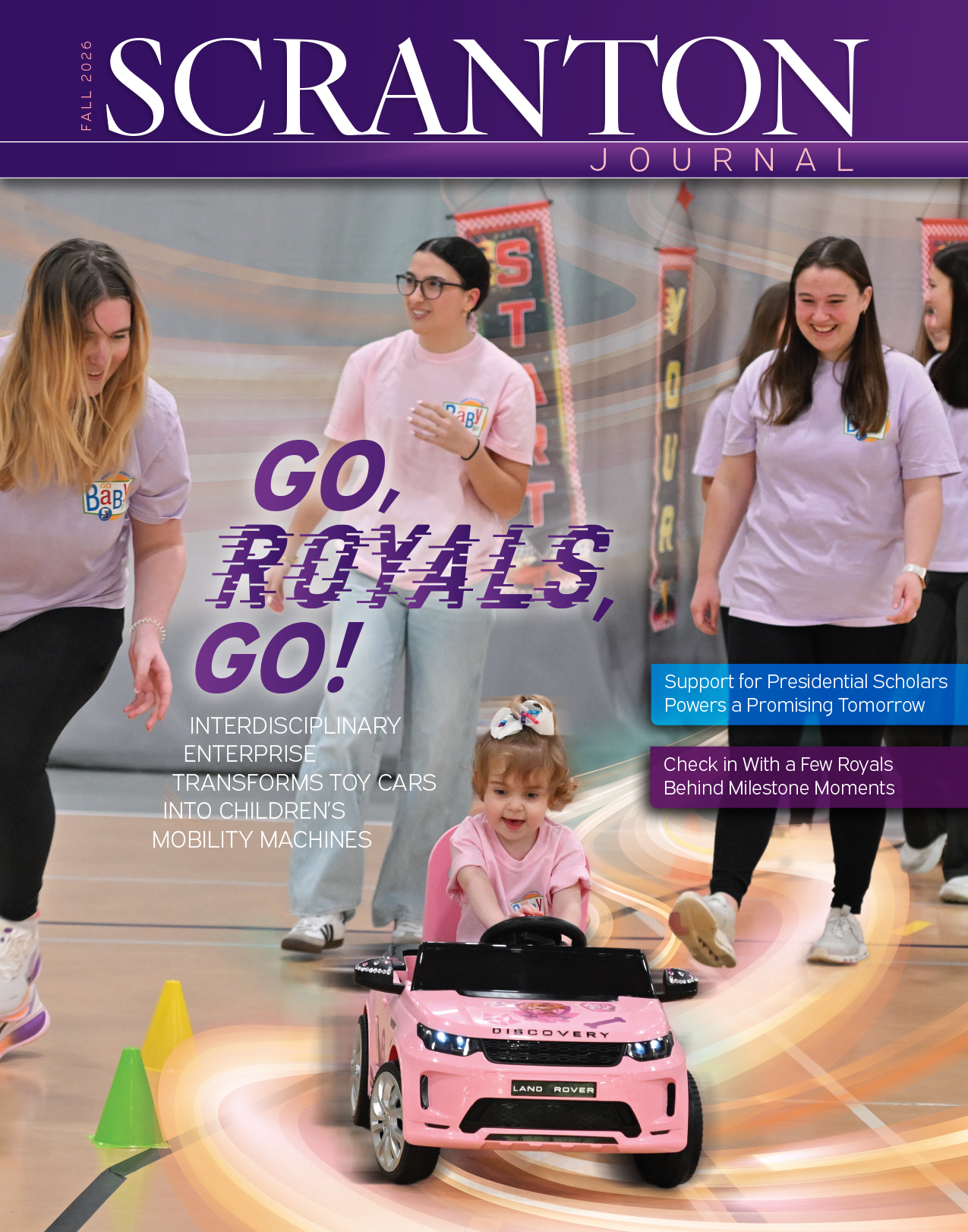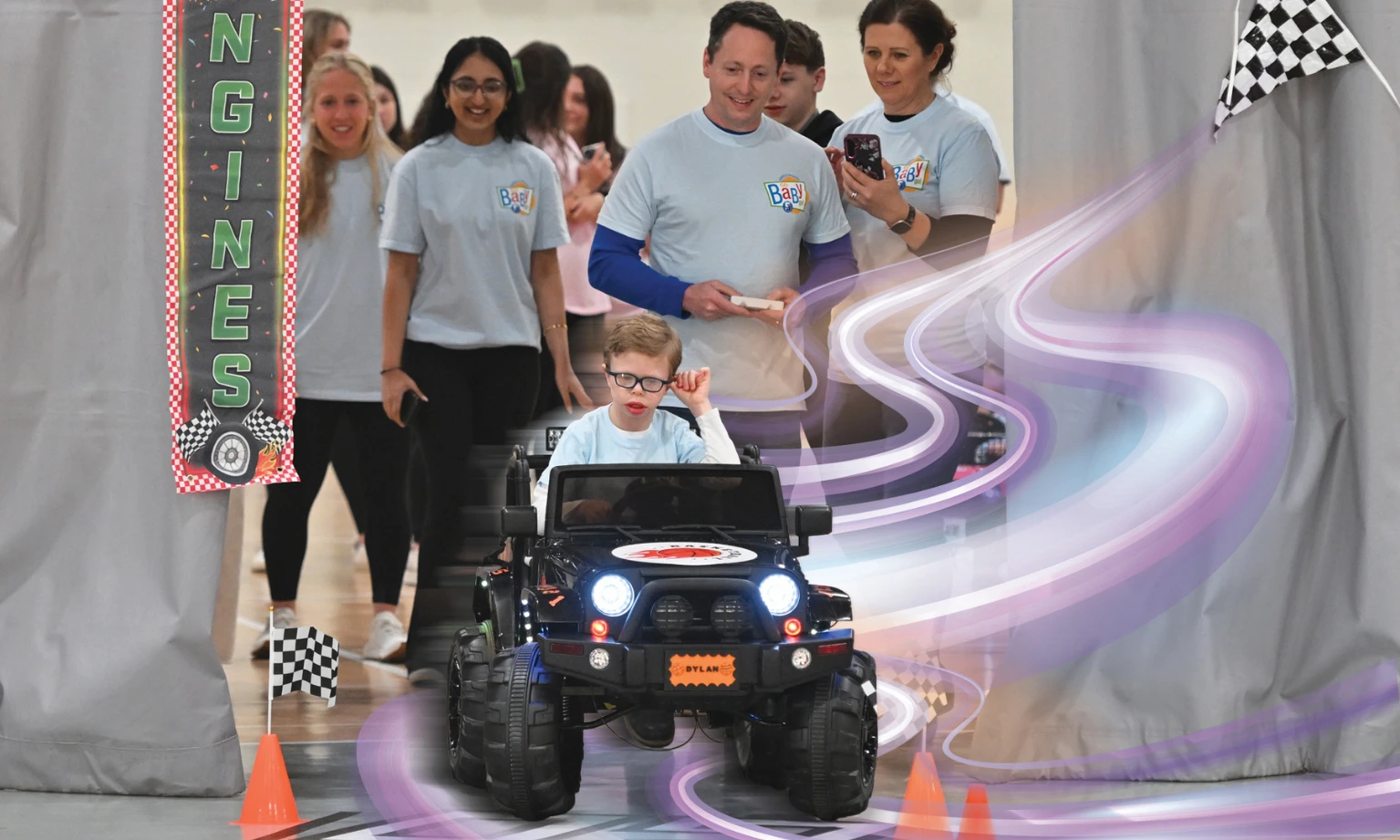
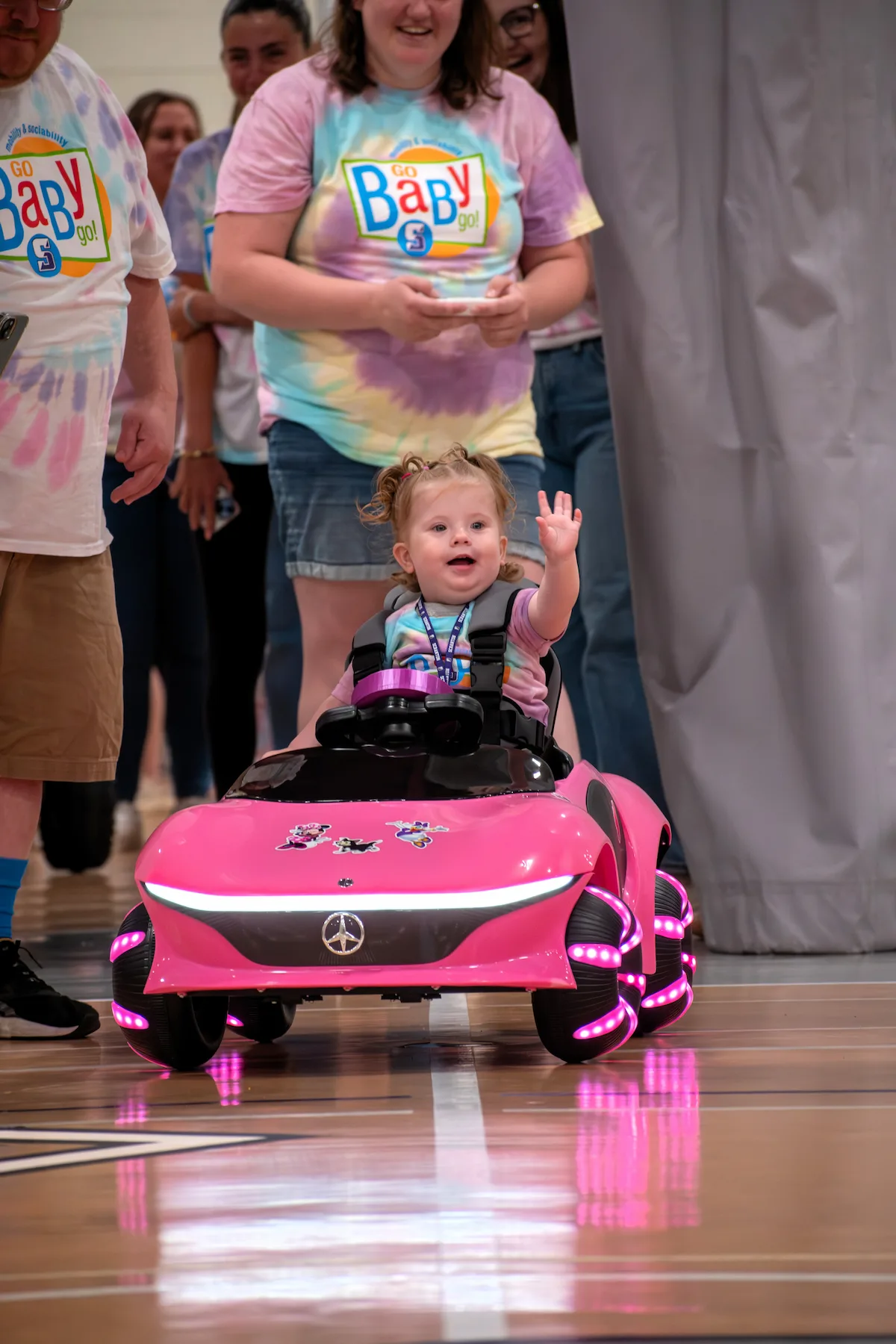
The Go Baby Go program resonated instantly with Stephanie DeNaples, OTD ’15, G’17. She recalls jotting the phrase in her class notes as an occupational therapy student at the University when Professor Karen Brady, D.Ed., introduced the national initiative that provides modified miniature cars to children with limited mobility.
The idea resurfaced for Dr. DeNaples years later on a playground at recess while she was working in school-based occupational therapy.
“A little boy who has spina bifida would just sit in a wheelchair...for the most part, he just watched from the sidelines. I kept thinking, ‘They’re kids, they want to play and they’re not getting the access they desire. Maybe we could get him some type of device to drive around the playground,’” Dr. DeNaples said.
“The Dunmore School District was very gracious in helping to procure a go-kart. Working with Jerry Williams, Adaptive Equipment Supervisor at St. Joseph’s Center, we modified the go-kart to support him.
“Just seeing his reaction was really, really magical."
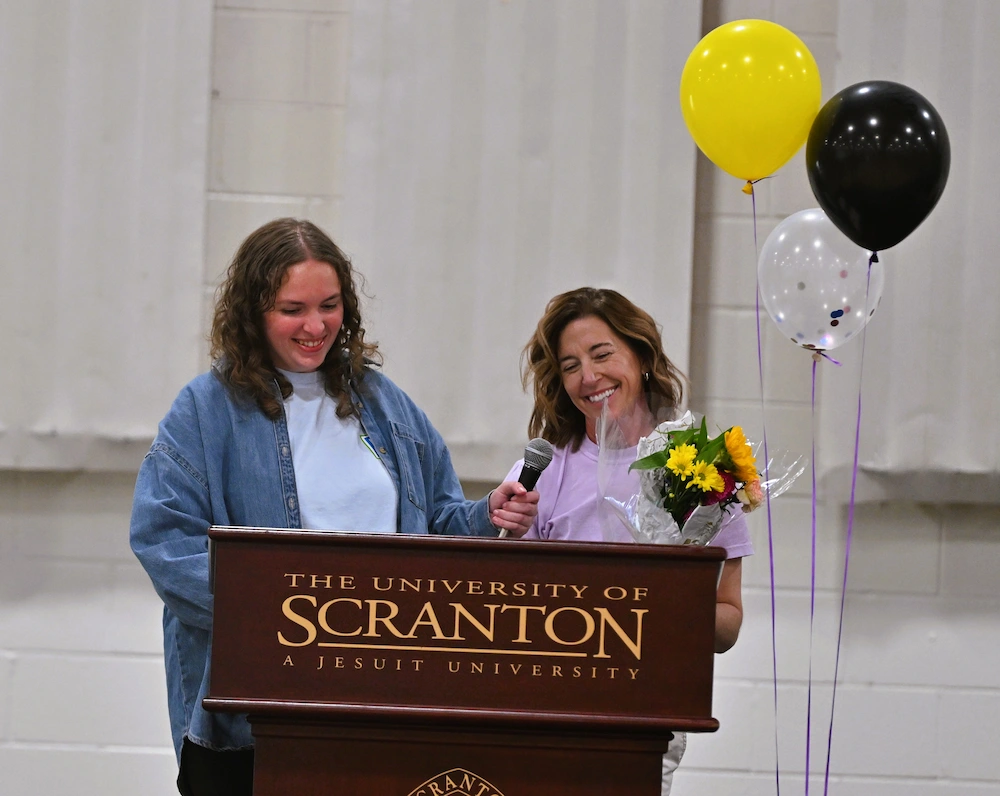
The University of Scranton Go Baby Go chapter student leader Kaitlyn Gelman ’25, G’26, with Stephanie DeNaples, OTD ’15, G’17.
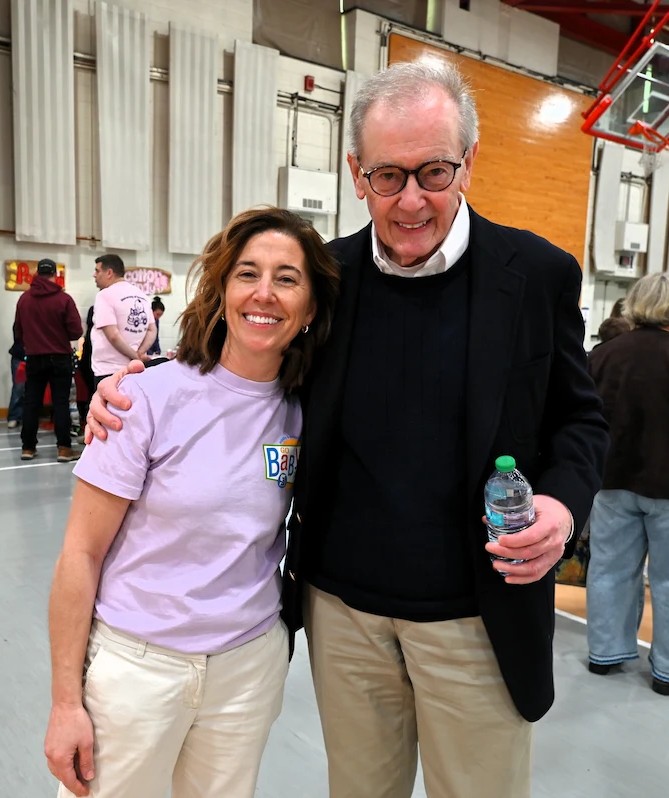
Showing Up, Finding Ways To Help
Dr. DeNaples connected all the pieces when she returned to the University as a faculty specialist in the Occupational Therapy Department, where she discovered a grant supported through The Edward R. Leahy Jr. Endowment. Created in 1995 with a gift from Edward R. Leahy ’68, H’01 and Patricia Leahy, the endowment honors the life and memory of their son, Edward, who was born with cerebral palsy and other disabilities.
“They (Ed and Patricia Leahy) ... are very compassionate toward children with disabilities,” said Dr. DeNaples, who, with assistance from student Kaitlyn Gelman ’25, G’26, applied for and received the grant in 2023.
“During my third year, I was invited to an initial meeting by a master’s student who was helping establish the (Go Baby Go) program. I was the youngest student in the room, but I was determined to get involved. I began working with Dr. DeNaples ... and I just kept showing up and finding ways to help,” said Gelman.
Their team initiated the University’s Go Baby Go chapter in the spring of 2024 with 40 student volunteers from the occupational therapy and mechanical engineering programs.
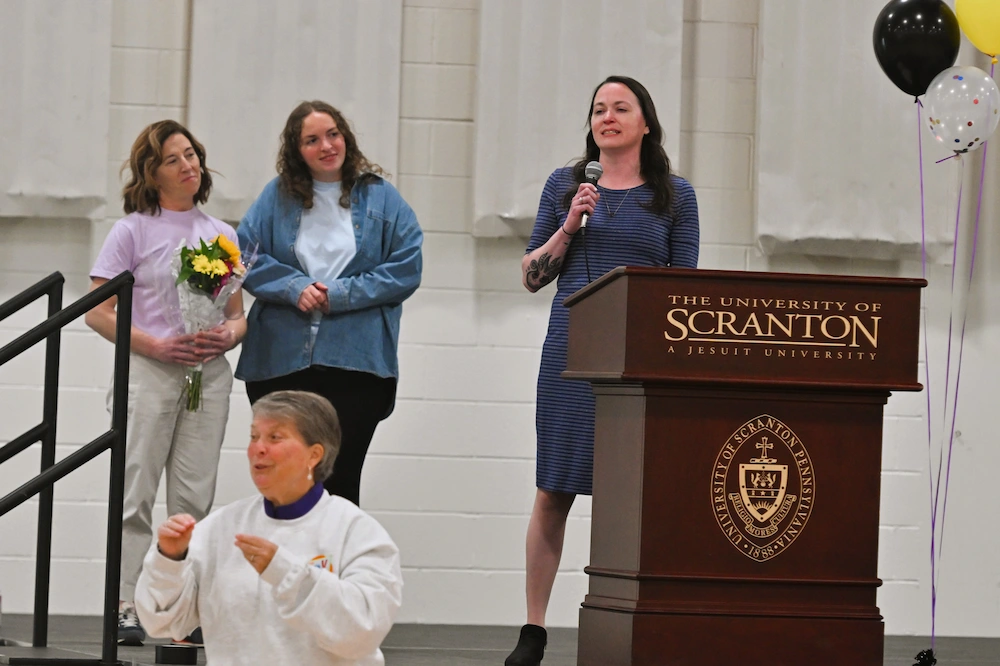
Kim Scatton, mother of Lucas, a 2025 car recipient, shares their story at the 2026 Go Baby Go Community Day. Shown at left are Kaitlyn Gelman ’25, G’26, and Stephanie DeNaples, OTD ’15, G’17. At bottom is Maryanne Stefko, interpreting via American Sign Language.
An Idea Takes Wheels
“When people think engineering, they think planes, automobiles, military applications, but there is so much more to it than that,” said Mitchell Sporing ’24, an engineering inspector in Alaska, who, as a mechanical engineering student, organized the original volunteer project teams from his major.
“Small things make a big impact, helping design something which can enable autonomy, joy and happiness.”
Tyler Roueche ’25, of Pompey, New York, modified electric ride-on cars to meet the needs of children in the program for two years.
“What surprised me most was how technically challenging each project became. I expected that changes to the cars would be relatively straightforward, with only minor customizations from one car to the next,” said Roueche, a design engineer at global engineering company Ramboll.
“Instead ... I worked with occupational and physical therapy majors who provided guidance on each child’s condition and mobility requirements and we translated those needs into engineering solutions. This included designing and implementing mechanical and electrical modifications, such as installing joystick controls, remote on/off switches and other custom components.”
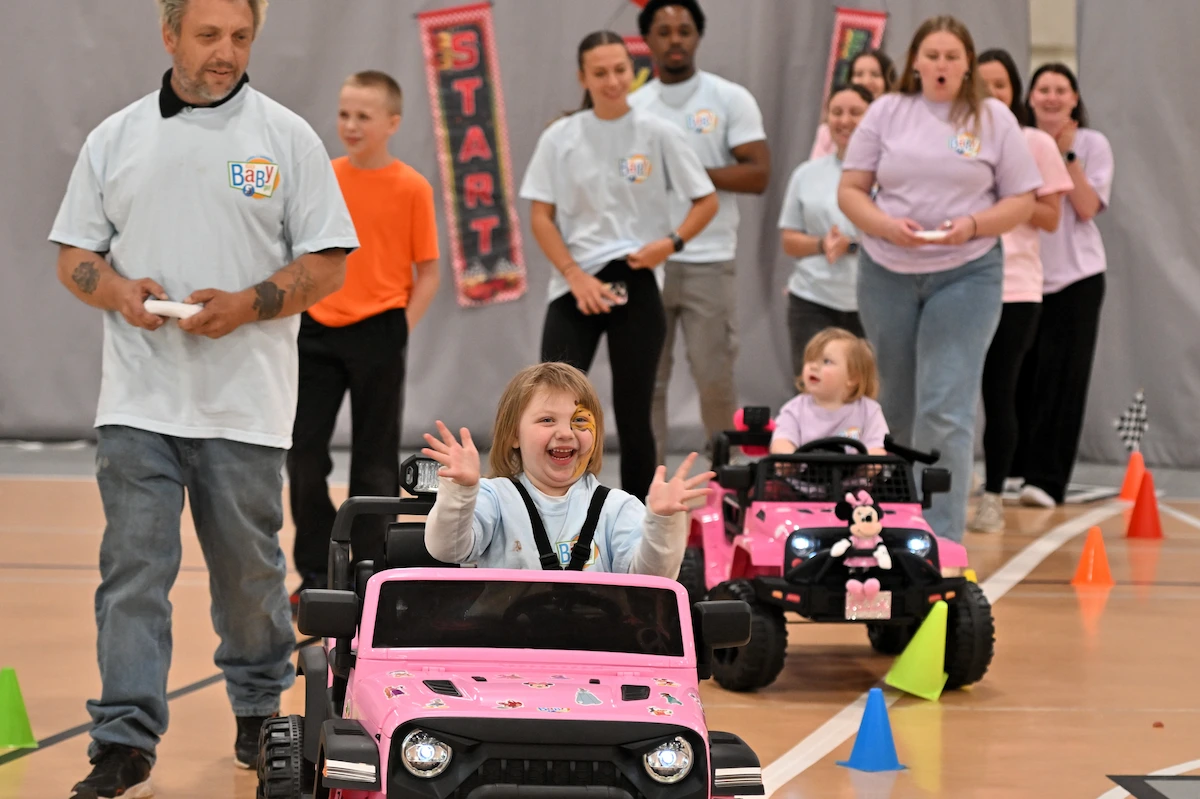
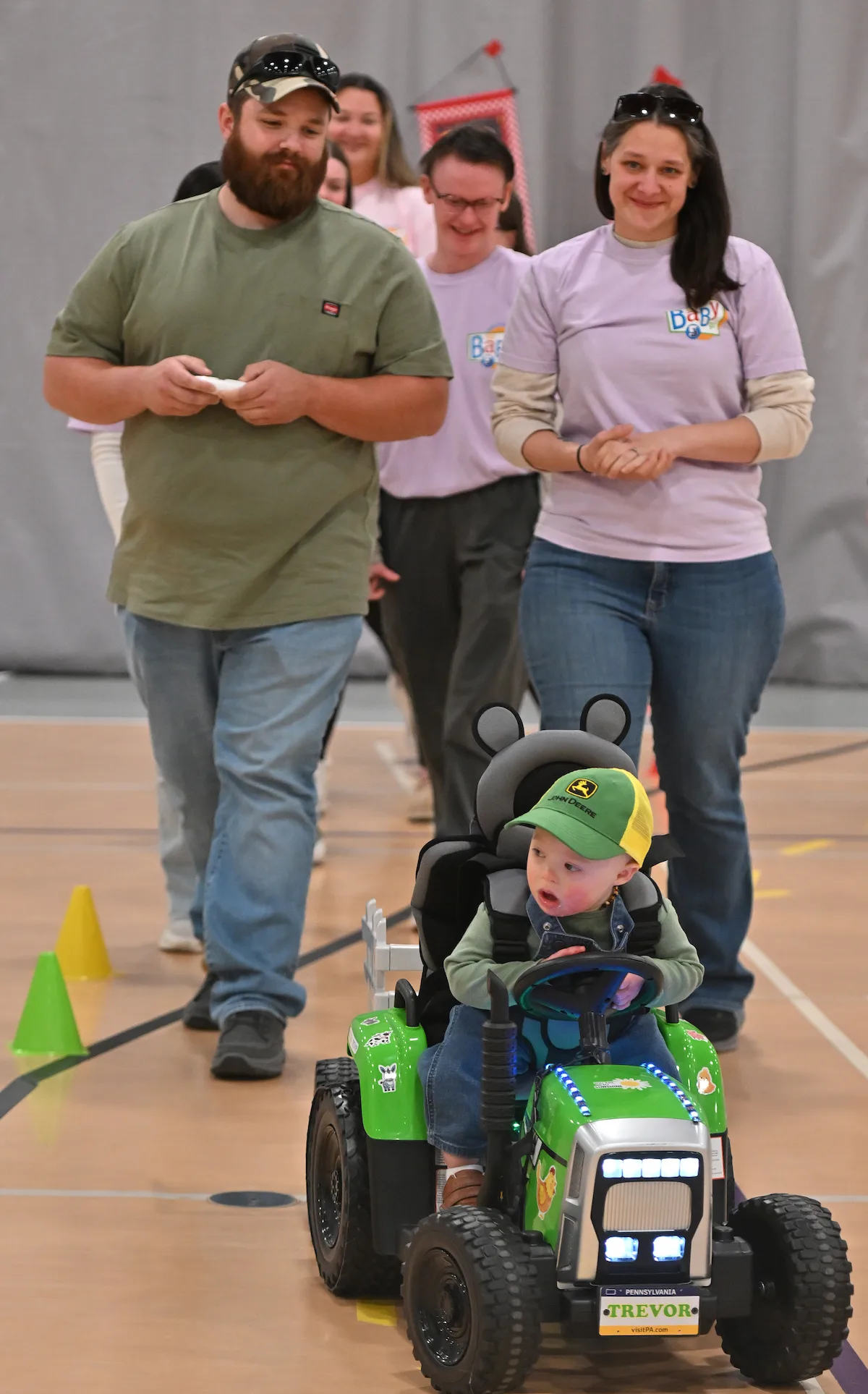
Those complex modifications made all the difference to Lucas, one of 11 car recipients from the program’s initial year.
“We were able to program the car to operate using a joystick, allowing Lucas to steer and move the car more independently, but the impact went far beyond that first experience,” said Gelman, who guided planning of the inaugural Community Day event, where the teams revealed completed cars to families for the first time.
“I reached out to Lucas’ mother Kim and asked if she would speak at our Community
Day. ...During her speech she shared that because of how well Lucas used the
joystick, he was later able to be fitted for a motorized, self-steering wheelchair. “...It showed me that what we were doing was not just creating a fun opportunity. We were helping a child explore his abilities, develop independence and discover a form of access that could continue to support his participation and mobility as he grew.”
Web Exclusive
Go Baby Go Through the Years
Area children with limited mobility receive motorized toy vehicles personalized for them by members of the University community.
Read Article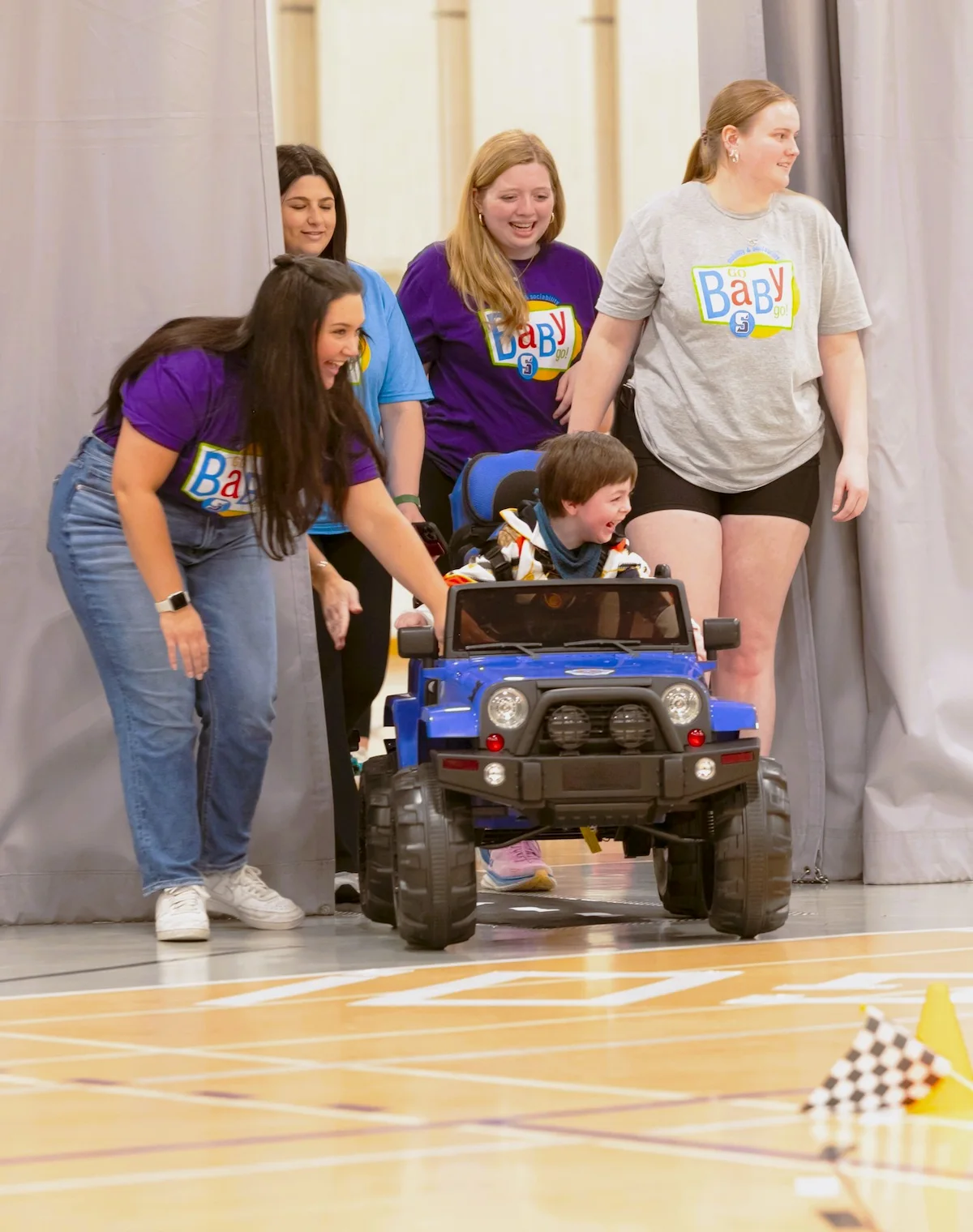
Royals’ Reach Expands
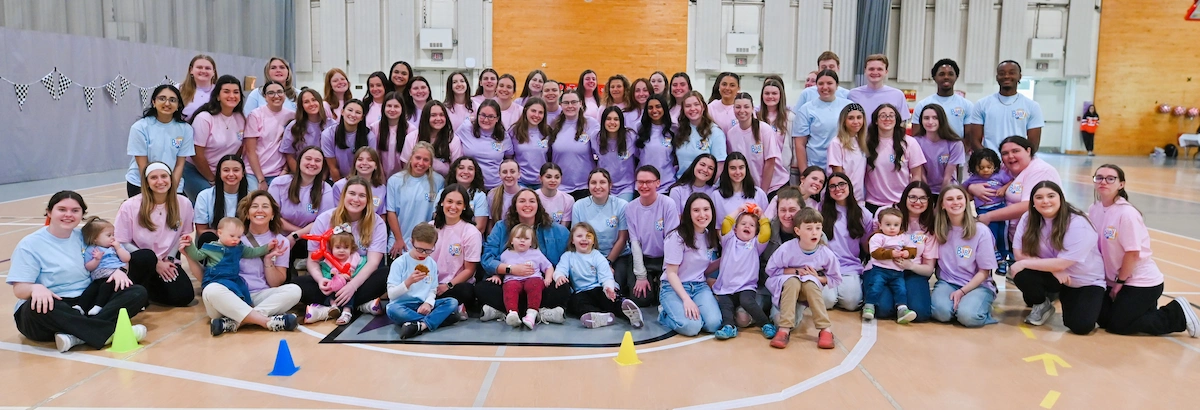
The program, which began with 40 volunteers, nearly doubled in the two years that followed.
Dr. DeNaples credited Gelman as “a powerhouse with communications and marketing,” which was vital in the first year. “We had to work to get people involved because there was no precedent,” said Dr. DeNaples.
“My colleague Laura Zagaki, DHSc, and I have developed a broad network of families of children with disabilities through pediatric curriculum-oriented engagement for students. Also, United Cerebral Palsy of Northeastern Pennsylvania and the Northeastern Educational Intermediate Unit 19 helped get the word out.”
The process begins months prior to the unveiling, when the University’s Go Baby Go volunteers meet with the children and their families to identify the individual modifications needed. Dr. DeNaples said the teams confirm the children’s favorite colors, songs and characters for the ultimate personalization.
“If the car is custom-made for them, they’re going to want to use it more.”
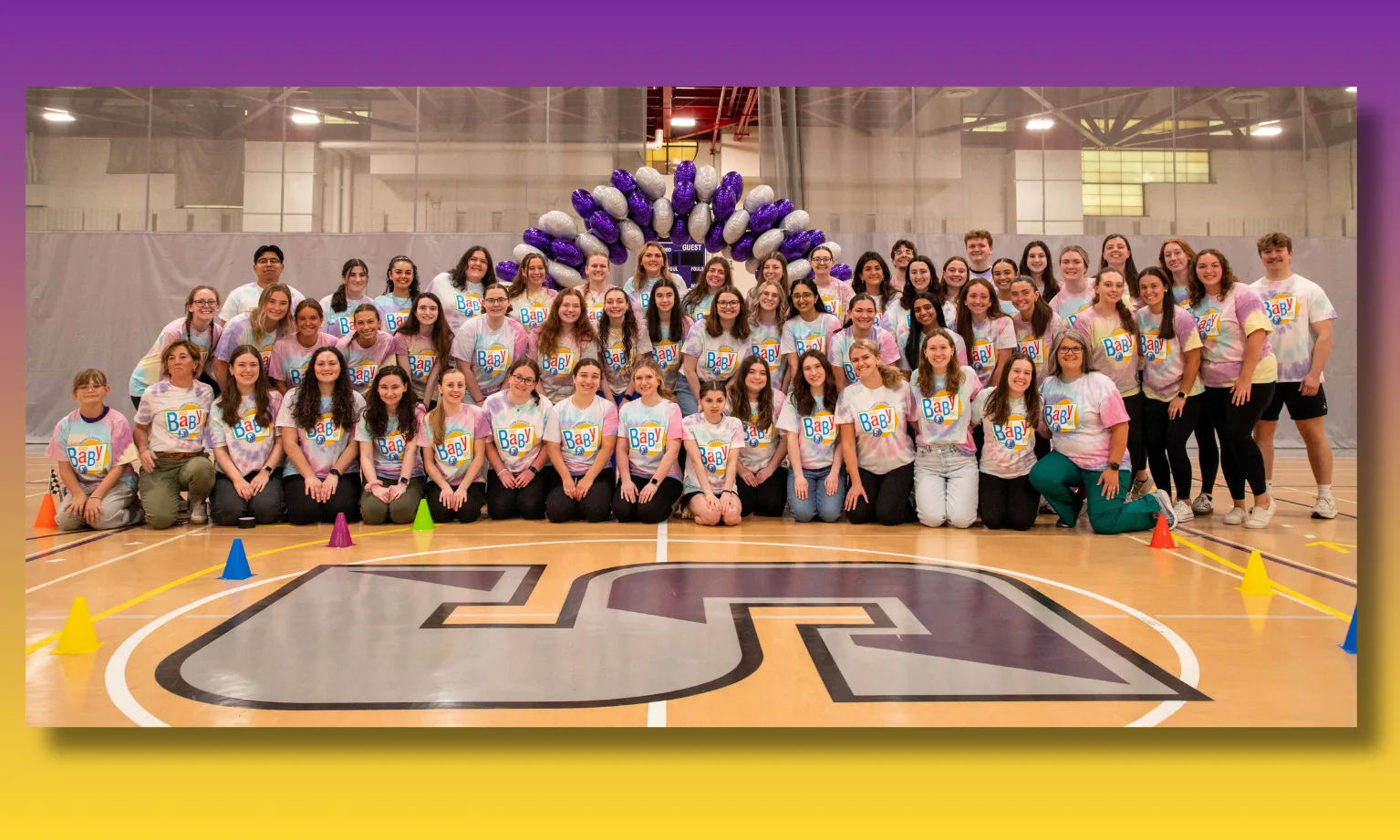
In 2026, more than 70 students volunteered across 11 majors — occupational therapy, physical therapy, mechanical engineering, electrical engineering, counseling, criminal justice, marketing, nursing, communication sciences, finance and biology, according to Dr. DeNaples.
“It’s all volunteers — students do not receive any credits. Students keep showing up, and I would not be able to do it without them. It’s incredible that they love it so much,” she said.
“Thank goodness for Tom Bryan, director of the IDEA Center in the new Weiss Hall, who was so helpful with 3D printing custom plastic parts, stickers and creative elements, as well as technical pieces,” she added, also crediting University support.
The Community Day is not in the rearview for Go Baby Go alumni.
“Families from each year return, not because their children are receiving a car, but because they want to support the new kids. That is powerful,” said Dr. DeNaples.
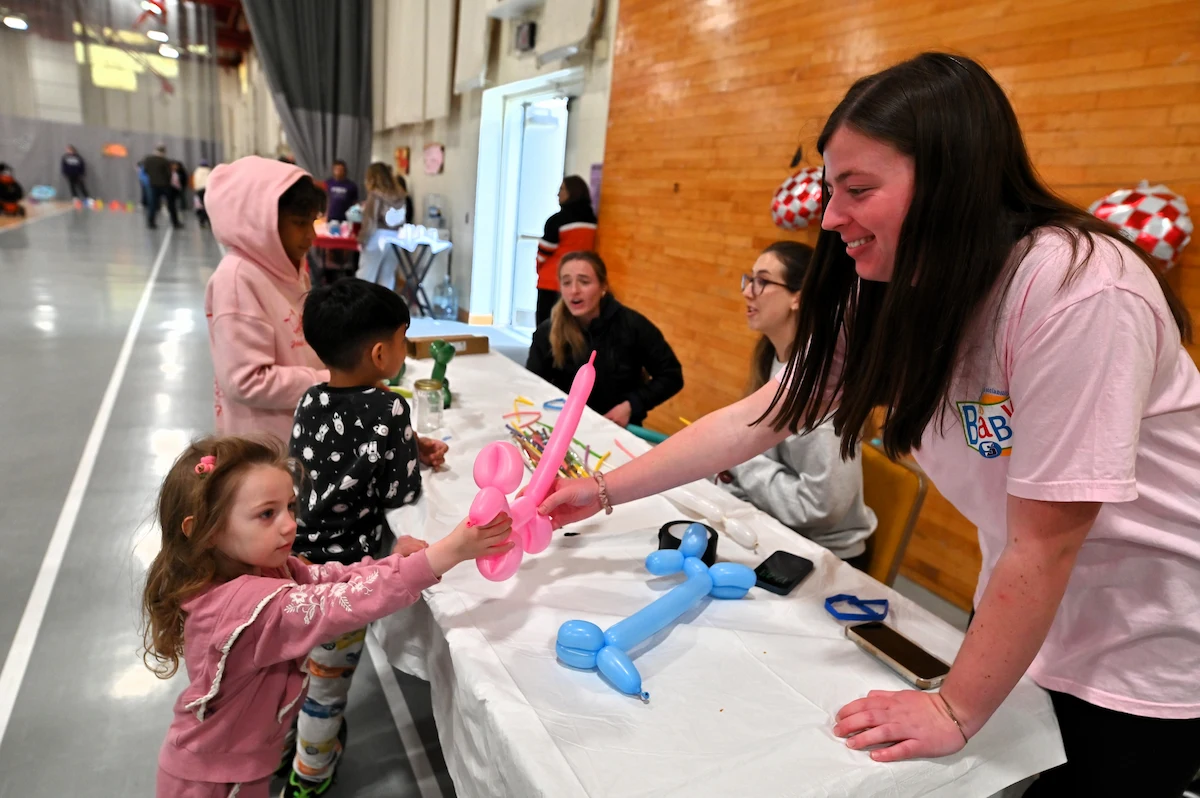
Kiera Lapham ’26, completed her master’s in occupational therapy. Here, she hands a balloon to Lily, who received a modified ride-on car during the 2nd Annual Go Baby Go Community Day and returned this year in support.